


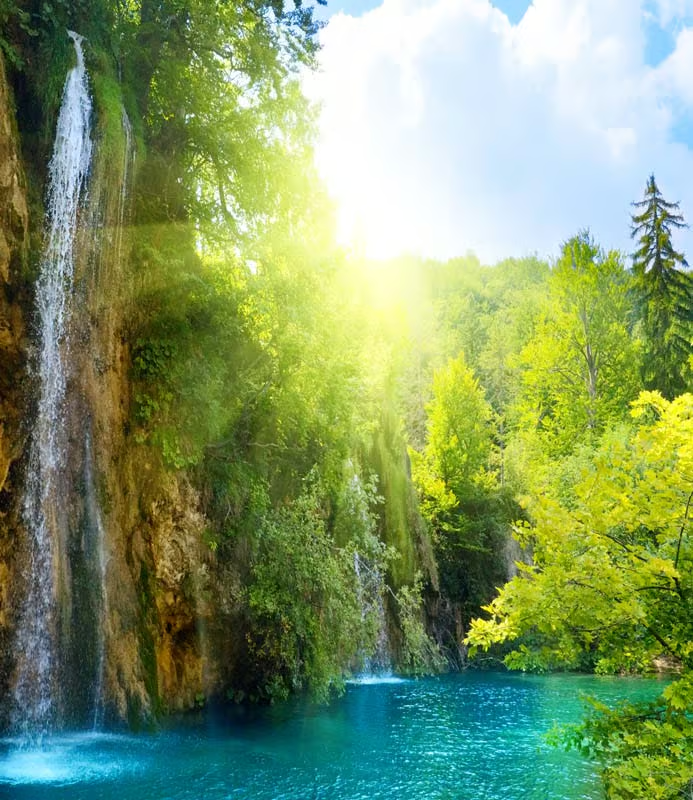


Croatia is a small but very diverse country, in Southern Europe. From the tips of Southern Dalmatian stretching through to the heights of Istria in the north, tourists can discover 8 amazing Croatian National Parks.

What are the 8 National Parks of Croatia?
- Plitvice lakes National Park
- Krka National Park
- Brijuni National Park
- Risnjak National Park
- Sjeverni Velebit National Park
- Paklenica National Park
- Kornati National Park
- Mljet National Park
1. Plitvice National Park
What are the Plitvice lakes?
Plitvice lakes National Park is a UNESCO protected park and one of the Croatia’s most beautiful natural attraction for visitors. There are16 stunning lakes, where a series of cascading waterfalls connect each lake.
When is the best time to visit?
When exploring the Plitvice lakes, it’s fair to say that each season has its own charm and natural wonder. May is a fantastic month to see the Lakes. Fresh green forests after spring growth and long daylight hours providing photographers with the perfect conditions to capture the beauty of the park. If preferring a variety of colour, then Autumn is the right time to come. We love how the red and orange tree foliage reflects in the waters. The colder months also bring fewer crowds.
Best day trips from Split to Plitvice lakes?
The distance is roughly 4 hours of driving. So look for a Tour Operator that offers unique stops along the way. We can also recommend self driving or requesting quotes for private transfers. If your family active holiday is close to Split, then we suggest Krka National Park instead.
5 Top tips when visiting Plitvice Lakes in Croatia:
- Explore the Upper lakes first and then go to the Lower Lakes and the biggest waterfall last. Following this simple tip means that you will be avoiding the big touristic groups that arrive from Entrance 1.
- Give 4-5 hours to see the entire Plitvice lakes area.
- If you are staying in Split it will take you about 3-4 hours to self drive.
- Once finished with walking the park you can visit one of the farms nearby. This region of Lika is very famous for cheese and honey. Everything is very fresh and GMO-free.
- Just a short drive from Plitvice Lakes National Park, near the city of Gospić, lies the small village of Smiljan. This is the birthplace of one of the world’s greatest inventors, Nikola Tesla. Visitors can explore the house where Tesla was born, as well as the nearby memorial centre, which features interactive displays, his inventions, and a museum dedicated to his extraordinary life and work.

2. Krka National Park
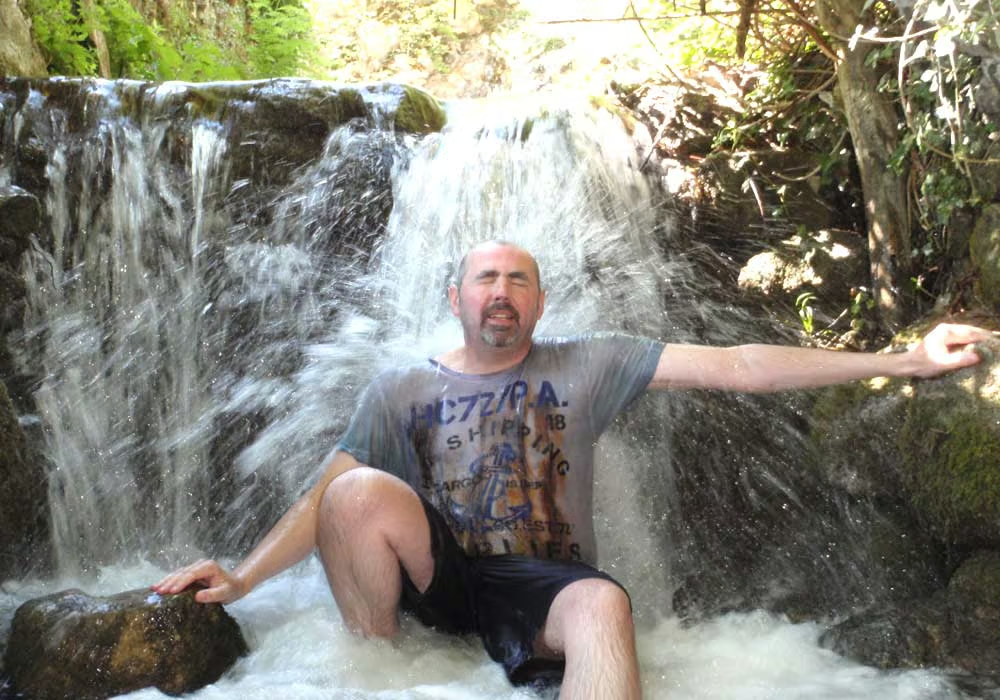
Just over an hour from Split is the Krka National Park. If you have enough time during your family active vacation, then take a visit. Krka park is famous for its travertine dams, which create gorgeous waterfalls.
Getting to Krka park is straight forward. From Split you will go on the highway and head towards the city of Skradin. Over there you can leave your car and start your family adventure in this national park. Buy Krka Park tickets from the office in Skradin.
Once in the main park area, simply follow the circular path route. This wraps around the park in a complete way. The distance is relatively short only 2km. The two most famous waterfalls are Skradinski Buk and Roški Slap. Skrandinski Buk, pours into lake Prokljansko that flows all the way to the Adriatic sea.
5 Top Tips when visiting the Krka National Park:
- Swimming at Krka Park is allowed. While swimming is no longer permitted at the famous Skradinski Buk waterfall, there are designated areas where visitors can enjoy a refreshing swim, including Roški slap during the summer season.
- If booking onto a public coach tour, choose the Krka Park & Šibenik tour. Visiting the city of Šibenik is a must-do experience. It’s the oldest native settlement in the country. Founded by Croatians in 1066. Today, Šibenik charms visitors with its rich medieval history, stunning UNESCO World Heritage-listed Cathedral of St. James, and its fascinating role as the first city in the world to have streets illuminated by an alternating current electricity system.
- To enjoy Krka National Park with fewer crowds, arrive early before 8:30 AM. Visitors travelling by car should consider entering through the Lozovac Entrance, where large free parking areas are available along with a shuttle bus that provides easy access to the famous Skradinski Buk waterfall.
- Save with an afternoon entry: During the summer months (June to September), visitors can save 25% on entrance tickets when entering after 3:00 PM. The discounted adult ticket price is €30, making this a great option for travellers who prefer a quieter visit later in the day.
- Consider the Skradin Entrance: Arriving through Skradin gives you the chance to enjoy a scenic boat ride along the Krka River to Skradinski Buk. The journey is a highlight in itself, offering beautiful views of the surrounding landscape before you reach the famous waterfall.
Is Krka National Park wheel chair & Accessible Friendly?
For a wheelchair-accessible trip to Krka National Park, head straight to the Skradinski Buk area. Enter via Lozovac for accessible parking and a ramped shuttle bus, or park at Skradin to take an accessible boat ride to the falls. The park’s buses and boats feature ramps to transport visitors directly to the start of the accessible loops.
While the park features remote, uneven, and steep trails that are largely inaccessible, the main 2km loop around Skradinski Buk provides excellent conditions for wheelchair users.
Not all restrooms at Krka Park are fully adapted. Be aware that while the park provides accessible ramps for certain restrooms, not all stalls are adapted for those who cannot easily transfer out of their chair.
Visitors with a European Disability Card or individuals with a certified special needs/disability status of over 50% are eligible for reduced-rate admission, and their accompanying personal assistant receives free entry.
3. Brijuni National Park
What is Brijuni ?
The National Park Brijuni is an archipelago of islands located off the west coast of Istria. This magical park consists of 2 islands and 12 islets. Declared a National Park in 1983, with a deep history reaching back into the 18th century. Veliki Brijun (meaning “Great Brijun”) is the largest island within Brijuni National Park and the main island that visitors explore.
The story of Brijuni
A rich Austrian magnate called Paul Kupelwieser bought an abandoned Austrian-Hungarian navy fortress and turned it into an exclusive beach resort. However, before starting work on the resort they first had to rid the islands of malaria. With the help of Robert Koch they succeeded and this magical place began welcoming its first holiday makers. Brijuni National Park is also famous for being a summer residence for the Yugoslav former dictator ‘Josip Tito’. Here he hosted many famous celebrities and world leaders. Now, the former Day Residence of ‘Tito’ is a museum which can be enjoyed by all.
Brijuni National Park offers rich flora and fauna with numerous authentic species. Surprisingly, it also has a safari park. Many exotic animals were given to Tito by diplomats that visited him on the island (including elephants, zebras etc).
5 Top tips for visiting Brijuni Park:
- How to keep children and teenagers happy? There are also several archaeological sites worth exploring. We do believe that even the most unimpressed teenager will be wowed by the 200 dinosaur footprints. These can be discovered on the island of Veliki Brijun. Visitors to Veliki Brijun can follow the dinosaur trail and see these ancient fossilised tracks at locations including Cape Ploče and Cape Vrbanj. Seeing where dinosaurs once roamed millions of years ago is an especially great idea for itineraries for family activity holidays in Croatia.
- Visit St. Mary’s Church: Step back in time with a visit to the beautiful 13th-century Church of St. Mary, originally built by the Knights Templar. Nearby, you can explore the remains of two ancient Roman villas, offering a fascinating insight into the island’s rich past. Archaeological discoveries also reveal evidence of a Bronze Age settlement, believed to have been home to the Histri tribe, from whom the Istria region takes its name.
- The easiest way to reach Brijuni National Park, is by boat from the coastal town of Fažana. The scenic crossing takes around 15 minutes, and the return journey is included with your National Park admission ticket.
- Hire a bike and explore at your own pace. Veliki Brijun is ideal for cycling, with quiet roads and scenic trails leading to many of the island’s main attractions. Bicycle hire is available close to the harbour, where you arrive. Cycling will definitely make it easier to visit the Safari Park, Roman ruins, St. Mary’s Church and the famous dinosaur footprints. If you’re visiting during the summer as part of a Croatia family adventure holiday, it’s recommended to reserve your bikes in advance.
- Discover Mali Brijun, the park’s second largest island. Discover Fort Brioni Minor, a remarkable fortress that offers a glimpse into the military history of the Brijuni islands. The panoramic views from the fort are worth the effort getting there. Just remember to buy the specific tickets to include Mali Brijun. Enjoy the 2.5 km educational trail, called the ‘Stone Storie sTrail’. Watch out for Guided Kayaking tours of the island. Another great way to explore the area.
4. Risnjak National Park
What is Risnjak?
The National Park Risnjak is one of the lesser known parks in Croatia. Located in the mountain area of Gorski Kotar. A natural barrier between the continental part and the coastal part of Croatia. Risnjak is a perfect destination for active families who love to hike. Risnjak National Park holds its name after its highest peak ‘Veliki Risnjak’. The peak got its name in turn from the Croatian animal RIS. In English this would be a LYNX. Risnjak is located perfectly between Rijeka and Zagreb and it is a great place to escape no matter what time of year you visit.
5 Top tips for visiting Risnjak National Park:
- During the summertime it is possible to fly fish on the upper 4 km sections of the Kupa River. Permits are authorised by the park itself. To buy fishing permits for the waters right outside the park boundaries, contact the ŠRUG Goran fishing club based in Brod na Kupi. The official fly-fishing season in this stunning region runs from mid-May through mid-October. Trout is caught until late September. Grayling till mid October. The best hatches occur in late May and June, when the river waters are alive with food and the fish feasting.
- The Big 3. Lynxs, Bears and Wolves can be found in the Risnjak National Park. To successfully photograph the elusive ‘”‘big three’, your best strategy is to rent a wooden cabin observatory. Brown bears are the most frequently seen, where the Lynx is the most elusive.
- Rafting on the Kupa River takes place on the fast-flowing upper sections near the Risnjak National Park and Brod na Kupi. Rafting tours tend to last between 2.5-hour to 3 hours. These will include taking on thrilling rapids, swim spots and cliff jumping. The Kupa River rapids are perfect for beginners and families. Your guides will provide all the necessary safety gear. It’s definitely an excursion to try, if planning a European family active vacation.
- Enjoy the Leska Educational Trail. Think you need to scale peaks to experience the park’s wild beauty? Think again. Starting near Crni Lug, this easy-going 4.4 km circular path serves up the region’s rich flora and fauna on a silver platter, minus the calf-burning elevation.
- Take on the highest peak ‘Veliki Risnjak’. Start your hike from the main entry point – Crni Lug. Pack layers of clothing as the climb is steep. At the top you’ll be rewarded with 360-degree views of the Adriatic Sea and Julian Alps. The Horvat Trail is the hardest route up, best tackled during the warmer months from May to September. We don’t recommend the restaurant at the main visitor centre in Crni Lug. Stock your supplies in Delnice or find a restaurant there instead. Tickets are purchased at either the Crni Lug administration building or the kiosk in the Razloge parking lot. Bring cash for the entry ticket, approximately 10 Euros.
Are there Vineyards in Risnjak National Park?
Because Risnjak National Park is located in the heavily forested, mountainous, there are no commercial vineyards. However, if you drive down toward the coastal Kvarner region or across to Krk Island, you will find excellent options. Vinarija Pavlomir is our preferred stop. This winery is located on the mainland coast in Novi Vinodolski. The modern tasting room has sweeping views of a picturesque valley. For anyone interested in Wine Tours of Croatia do reach out to our team.
5. Sjeverni Velebit National Park
What is Sjeverni Velebit National Park?
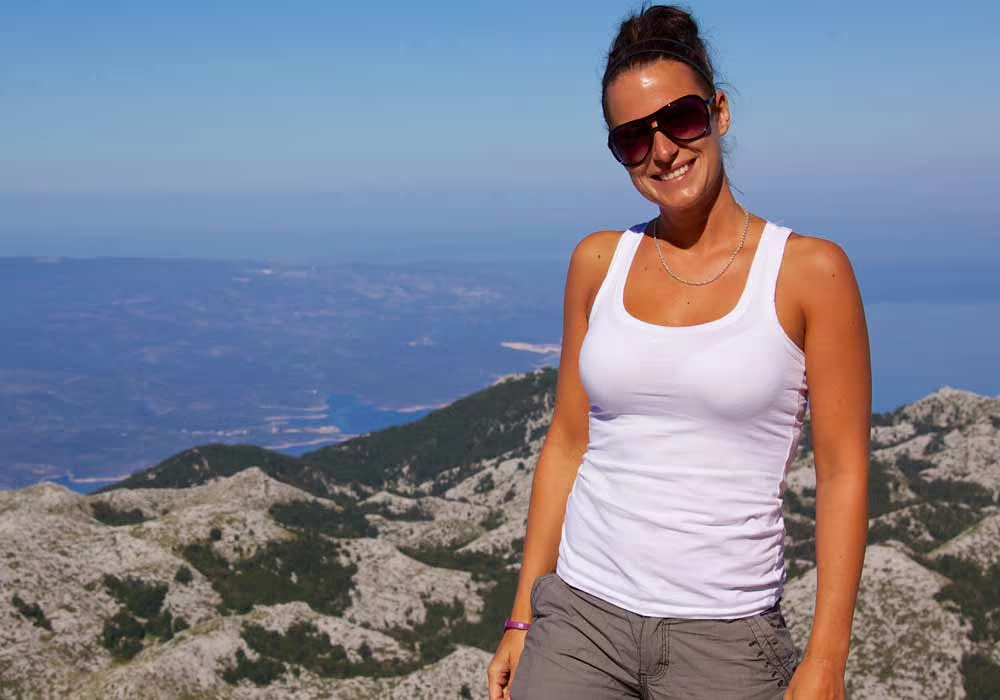
Northern Velebit is one of two national parks located on an impressive mountain. A wild, remote and beautiful place. Perfect for trail hiking, caving, climbing and finding solitude in nature. Officially the youngest national park in Croatia, founded in 1999. The Sjeverni Velebit Park covers 109 sq. km. The park is a sanctuary for brown bears, grey wolves and the endangered Eurasian lynx. The park’s ancient beech forests are protected by UNESCO.
Top Tips for exploring Sjeverni Velebit National Park:
- One of the most famous mountain trails in Croatia is the Premužić trail. The trail was named after Ante Premužić, a passionate mountaineer that built this masterpiece. Thanks to him now we can enjoy one of the most inaccessible mountain sections in Croatia, Hajdučki and Rožanski Kukovi . It stretches over 56 km in total and about 16 km of the route is on the territory of the National Park Sjeverni Velebit. For hiking enthusiasts this is a must do trail.
- Bring Cash and your own supplies. There are no shops inside the park, so pack all your own drinking water and energy snacks. You can grab simple, warm meals or drinks at the Zavižan Mountain Lodge.
- The Mountain huts in the park need pre-reservation for night stays. Always check availability and book through the HPS-managed huts reservation system.
- Another impressive area to visit is only 15 minutes on foot from the mountain hut on Zavižan and that is the Velebit Botanical Garden established in 1967. This garden is the home to numerous plant species and several endemic indigenous species like Velebit degenia and Velebit pink.
- Northern Velebit has many different access points but the main one is in a little village called Krasno from where you can access many different trails. It also hosts the oldest high-altitude weather station on Zavižan. On the same location you also have a mountain hut that is the starting point for conquering the surrounding high peaks of Velebit mountain such as Veliki Zavižan 1676m, Balinovac 1601m, Zavižanska Kosa 1620mand Vučjak 1644m. All of these mountains offer breathtaking views of Lika county and also of the Dalmatian islands. If you are on an active family holiday in Croatia this really is a special place.
Where to Buy Northern Velebit National Park Tickets?
Standard park tickets are typically valid for 1, 2, or 3 days, which gives you more than enough time to explore iconic hikes like the Premužić Trail.
If planning to purchase your entry pass in person for Velebit National Park, you can buy them directly at these key spots:
- Babić Siča Entrance: The main northern entry point to the park, featuring an official ticket kiosk.
- Velebit House (Krasno): The park’s primary visitor center located right in Krasno village. Stop here to pick up standalone tickets, visitor center passes, or money-saving combined tickets.
- Alan Mountain Hut: Located in the southern section of the park, this mountain lodge also sells park tickets on-site.
- Directly from Park Rangers: if you slip into the park via a more remote trail, you can purchase your ticket directly from the active rangers patrolling the area.
6. Paklenica National Park
What is Paklencia National Park?
Paklenica is the second national park located on the Velebit mountain. The area of Mala and Velika Paklenica was proclaimed a national park in 1949. This park is located from the south side of Velebit mountain in the region of Dalmatia and is the best-preserved forest complex in Southern Croatia. There is an extraordinary amount of geomorphological structures here.
There are two entrances in the park, Velika and Mala Paklenica (note Mala only works in the high season) and if you want to explore the park area a bit better there is also a camp site as well as numerous renovated stone houses for rent.
Paklenica National Park is definitely one of the lesser known Croatian national parks but it is certainly a true gem worth exploring.
Top Tips for visiting Paklencia National Park:
- Arrive Early. For better parking, quieter trails and better temperatures to hike.
- Prioritise seeing the Velika Paklenica Canyon first. This mind melting limestone gorge is the park’s highlight. The wide, well-marked trail follows a stream through towering cliffs.
- Visit Manita Peć Cave. One of Croatia’s best-known show caves, Manita Peć features impressive stalactites and stalagmites. Guided tours are offered during the visitor season, but you’ll need to hike about 1½ hours uphill from the entrance to reach it.
- Know your own fitness levels. The Easy Trail is Velika Paklenica Canyon walk. For a moderate challenge, head to Manita Peć Cave. For experienced walkers that require challenge, then we recommend the longer Velebit ridge routes. Or walk to the mountain accommodations like Paklenica Mountain Hut
- Watch climbers on Anića Kuk. Anića Kuk is Croatia’s most famous climbing wall, rising over 350 metres. Even if you don’t climb, it’s fascinating to watch experienced climbers tackle the vertical limestone face. Paklenica is the most famous park in Croatia especially for people and families that enjoy rock climbing. No matter if you are a beginner or an experienced climber you will find the perfect route to climb (routes are from 3a to 8c). In case you are coming specifically to climb you can buy a 3-day or 5-day pass or if you are an active family who just wants to give it a go for a day that’s also possible. We also offer climbing as part of your Brac Island Family Adventure Week.
Is Paklencia National Park suitable for a teenager active holiday?
From diverse hikes to stunning climbing areas. The Park will keep active teens happy. The visitor centre; which is called the ˝Underground Secrets of Paklenica˝ is also one of many interesting places to visit. For families with teenagers I do believe this national park will excite, impress and inspire. The visitor centre is located in a former bunker build by the Yugoslav army & has been transformed imaginately into an exciting space with a variety of different things to do (we especially love the artificial climbing wall).
7. Kornati National Park
What is the Kornati National Park
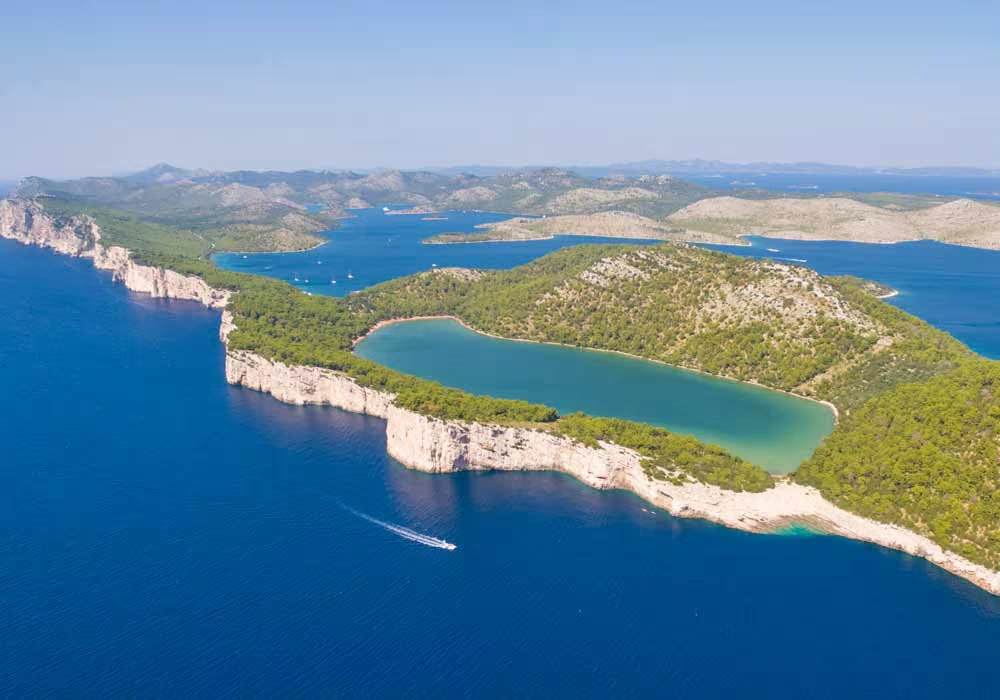
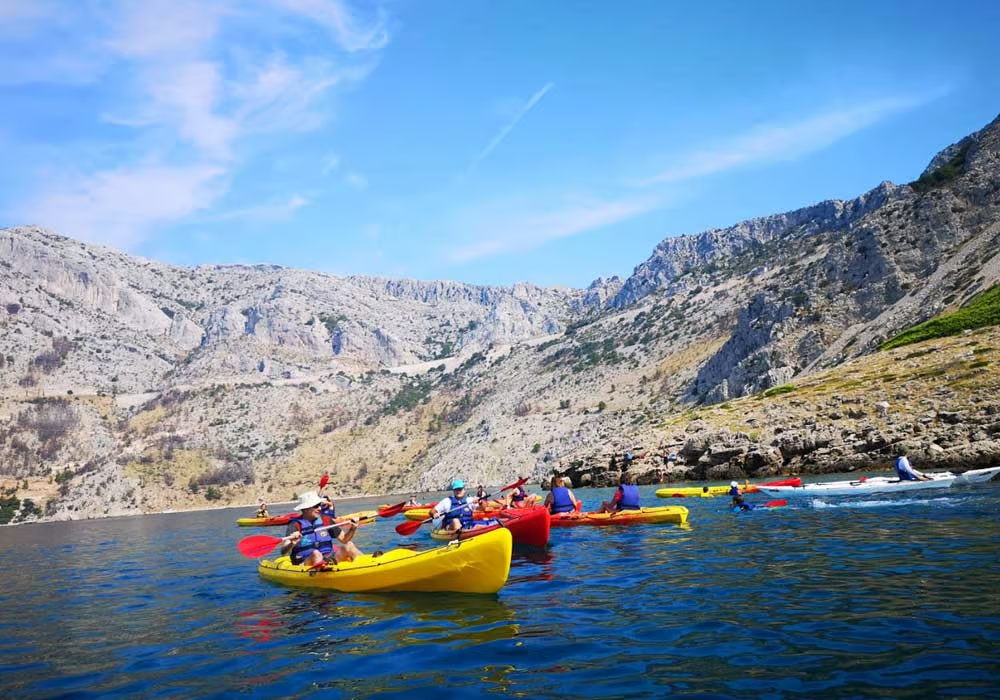
National Park Kornati is a breathtaking archipelago of nearly 90 protected islands, islets, and reefs in the Adriatic Sea. Known for its crystal-clear waters, dramatic cliffs, and peaceful landscapes, it’s best explored by boat or kayak. Enjoy 238 km of coastline. A true heaven on Earth. Lots of locals and fishermen in the past bought the small islands from the landlords and started to cultivate the land, especially on the island of Kornat. As a result these islands are now covered with stone walls that divide the land among the owners and prevent the sheep from going from property to property. There are many plant species here, despite its rocky appearance. 650 to be precise. But the most common is of course the olive tree and the most interesting is of course the orchid. There are 9 species of orchid which is hard to believe when your eyes only see rocks.
How to get to Kornati?
There are many places in Dalmatia from where you can visit Kornati. However, the main town for the departures to Kornati is from the island of Murter. The small town of Murter is home for most of the island and islets residents.
Top Tips for visiting Kornati National Park:
- The best time to visit is between May to September, when calm seas and warm weather are ideal for boating, swimming, and snorkelling. Always follow the weather reports. The Adriatic. Sea can change very quickly, particularly when strong winds such as the bora or jugo develop.
- Discover the the saltwater Mir Lake. Located on the southeastern tip of Dugi Otok, just northwest of Kornati National Park. This coastal lake is separated from the Adriatic Sea by a narrow strip of limestone. We highly recommend swimming in it’s warm calm waters. The peaceful atmosphere surrounded by pine forests and rocky hills, is a life affirming place.
- Hiring a boat with an experience skipper is a great way to explore this national park. Kornati is a place that is perfect for a family island hopping sailing holiday in Croatia.
- If you enjoy eating fresh fish, you’ve come to the right place. Indulge in several family-run island restaurants (or konobas). They serve freshly caught fish and traditional Dalmatian cuisine. Always make advanced reservations from June to September. Pair your fish with a white wine. Look for the native grape ‘Pošip’ when ordering your Croatian wine!
- Snorkel and see colourful fish. But please wear ocean friendly sun lotion.
8. Mljet National Park
What is the Mljet National Park?
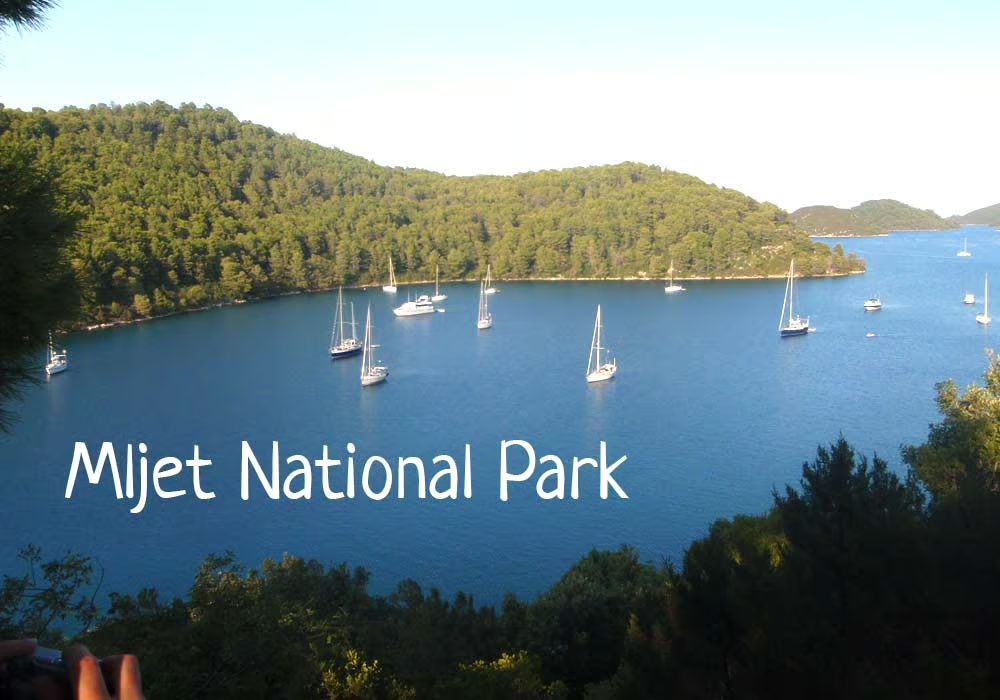
The gorgeous island of Mljet is the home of the southernmost national park in Croatia. This national park is one of our personal favourites and trust us when we say that once you come here it will stay with you in your heart.
Mljet is an island that is also known as the green island dues it lovely forests; however it is the two beautiful lakes on the island called Veliko i Malo Jezero; which make this park such a wonder. These two lakes are saltwater lakes which look stunning from above but equally captivating from ground level. Here you can hike, cycle and paddle around these crystal clear waters. This national park is also the home of many endemic plants such as the Dubrovnik cornflower (Centaurea ragusina) and tree spurge (Euphorbia dendroides) and 90% of the island is covered in a enchanting dense forest.
Mljet is an island that always fascinated people and it has many legends. One legend says that this is the island where Paul the apostle was shipwrecked and another legend says that this is the place where the goddesses Calypso kept Odysseus stranded.
Top tips for a visit to Mljet:
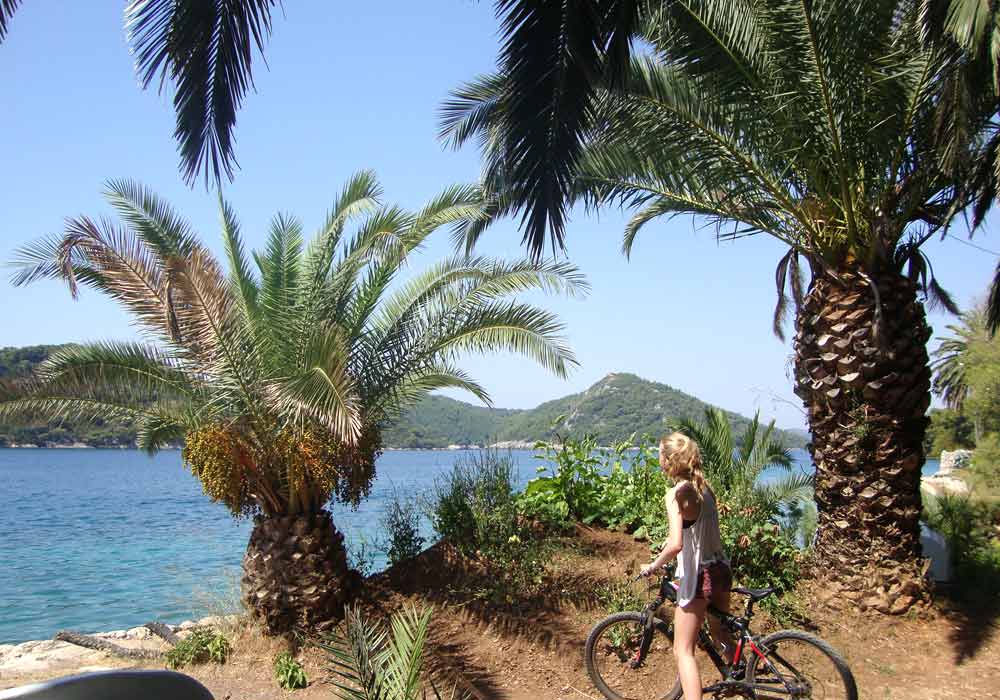
- The best way for an active family to explore the island is definitely by hiking, cycling or kayaking. These methods are a great way to immerse yourself in this gorgeous national park and enjoy all the pristine nature it has in store for you. You can also explore the dense forest on many different hiking trails and climb the highest point on the island (Veliki Grad 514m) that rises above Babino Polje in the centre of the island. It’s a view point you and your family will surely treasure.
- One of the many highlights when visiting Mljet is a trip to the Church of St. Mary built in the 12th century; located on the Isle of St. Mary.
- Mljet island stretches parallel with the Pelješac peninsula and our advice is to stay in Orebić and explore the National Park Mljet, as well as the peninsula and island of Korčula from here. For families doing a Croatia activity holiday with us; visiting Korcula before or after a week with us is definitely something to consider. It is a magical place.
- Go Kayaking or Paddleboarding. The sheltered waters of Veliko Jezero are ideal for beginner paddlers. Exploring on SUP Boards gives you access to quiet coves and beautiful lakeside scenery that many visitors don’t see.
- Stay overnight in Pomena or Polače. Pomena is a small harbour village on the western tip of Mljet. You can walk into the national park almost immediately. There are plenty of restaurants to choose, with sunset dinners. Polače is their historical harbour. Found on the northern side of the park. The village is home to the remains of a large Roman palace complex, one of Mljet’s most important archaeological sites.
 We recommend